
Introduction
Glass is a defining feature of modern UAE architecture—large façades, curtain walls and panoramic windows create the iconic skyline visible in Dubai and Abu Dhabi. While glass performs well when installed, the handling phase is where most problems occur. Manual lifting is still used on many sites, but it brings heavy risks: material damage, worker injuries, slow schedules and unnecessary costs.
Vacuum glass lifters are engineered to address each of these problems. Below we list the most common manual-handling issues and explain how vacuum lifters solve them—so contractors can work safer, faster and smarter.
1. High Risk of Breakage & Material Damage
Problem
Large or tempered glass panels are fragile while being moved. Manual handling causes:
- Uneven pressure and stress points
- Dropping, sliding or sudden shocks
- Chips, cracks or full panel breakage
How Vacuum Lifters Solve It
Vacuum lifters use multiple suction pads that distribute load evenly across a panel. This eliminates concentrated stress points and keeps panels completely steady during movement. Typical advantages include:
- Smooth, even gripping that prevents cracks
- Ability to lift and rotate panels without flexing
- Significant reduction in material waste and replacement costs
2. Safety Hazards for Workers
Problem
Manual glass handling often requires multiple workers to support a single panel. Common worker risks include:
- Back strain and musculoskeletal injuries
- Cuts and puncture wounds from broken glass
- Fatigue and loss of concentration—leading to accidents
How Vacuum Lifters Solve It
With vacuum lifters, the mechanical device carries the weight—reducing manpower and removing the need for workers to hold heavy panels. Key safety benefits:
- Fewer personnel required—often only 1–2 trained operators
- Remote controls and stable grips reduce human exposure
- Lower probability of on-site injuries and insurance claims
3. Limitations with Heavy & Oversized Panels
Problem
Modern façades use jumbo panels, thick laminated glass and multi-pane units that are impossible to handle by hand safely.
How Vacuum Lifters Solve It
Heavy-duty vacuum lifters are engineered to handle large loads—from several hundred kilograms to multiple tonnes depending on the model. Benefits include:
- Safe lifting of large-format glass
- Controlled rotation and tilt for precise installation
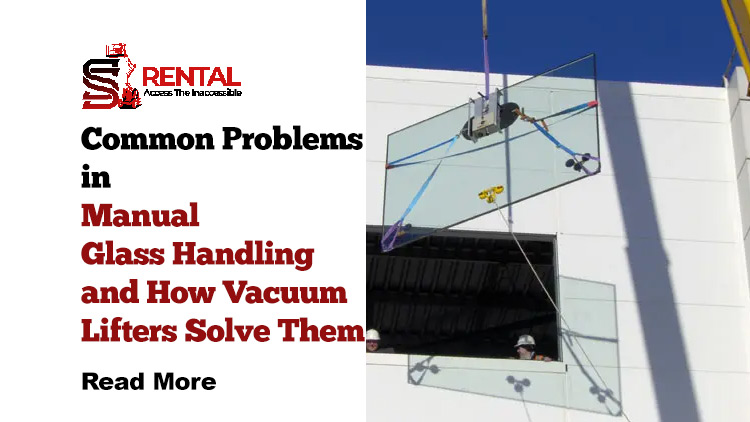
- Integration with cranes, spider cranes, boom lifts and scissor lifts
4. Slow Installation Time
Problem
Manual alignment, repositioning and coordination make installations long and inefficient—delaying project timelines.
How Vacuum Lifters Solve It
Vacuum lifters speed up the workflow by:
- Allowing rapid, repeatable positioning
- Reducing team coordination time
- Minimizing rework caused by poor placement
Faster installation translates directly into cost savings and better client satisfaction.
5. Difficulty Achieving Precision Alignment
Problem
Achieving millimetre-level alignment by hand is difficult—misalignment leads to gaps, leaks and rework.
How Vacuum Lifters Solve It
Vacuum lifters provide:
- Fine control for tilt and rotation
- Zero-vibration handling for delicate final positioning
- Repeatable accuracy for multi-panel façades
6. Inefficiency in High-Rise & External Installations
Problem
Manual handling at height is unsafe and often infeasible, especially in wind or when working from narrow platforms.
How Vacuum Lifters Solve It
When mounted to cranes or aerial platforms, vacuum lifters:
- Provide secure contact at height
- Withstand mild wind loads with proper precautions
- Enable façade installation on skyscrapers and tall towers
7. Increased Project Costs
Problem
Manual handling drives costs via bigger crews, more waste, and longer schedules.
How Vacuum Lifters Solve It
Using vacuum lifters reduces labor hours, minimizes breakage and speeds schedules—delivering an improved ROI on façade projects.
Quick example: Replacing an 8-person manual lift with 1 operator using a vacuum lifter saves labour and reduces the chance of having to replace broken panels—often paying for the rental within a single day on medium-sized jobs.
8. Handling in Confined or Restricted Spaces
Problem
Tight indoor sites—storefronts, villas, lifts or small rooms—make manual handling risky and can damage walls and floors.
How Vacuum Lifters Solve It
Compact, battery-powered vacuum lifters are ideal in confined areas. They allow precise manoeuvring without additional personnel or risk to surrounding finishes.
Conclusion
Manual glass handling remains a major source of risk, delay and expense for UAE construction projects. Vacuum glass lifters address the core problems—reducing breakage, protecting workers, enabling large-panel handling, and speeding up installations. For contractors focused on safety, precision and cost-efficiency, vacuum lifters are an essential tool.
Related reading: Vacuum Glass Lifters Rental — SS Rental · Access Equipment Rental — SS Rental
Rent Vacuum Glass Lifters — Reduce Risk, Save Time & Cut Cost
SS Rental supplies fully serviced vacuum glass lifters across the UAE with trained operators, same-day delivery and technical support.
Book a Vacuum Glass Lifter Now
Or call / WhatsApp: +971 55 524 6989

